
What happens to child arrangements if an ex-partner wants to relocate abroad?
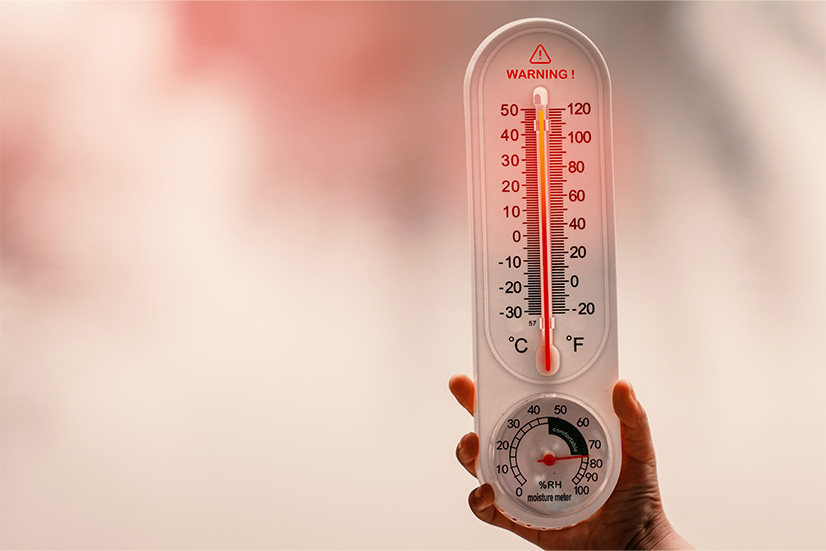
As the UK experiences increasingly frequent and intense heatwaves, a familiar question is landing on employers’ desks: at what temperature does the law say staff can stop working?
The answer catches many people off guard. Despite the widespread assumption that a fixed threshold exists, usually cited as 30 degrees, there is currently no legal maximum workplace temperature in England and Wales.
What the law actually requires
The Workplace (Health, Safety and Welfare) Regulations 1992 require that temperatures inside a workplace be “reasonable”, but they do not set an upper limit.
The Health and Safety Executive’s guidance sets minimum comfort temperatures of around 16 degrees for sedentary work and 13 degrees for more physical roles, but no equivalent ceiling exists.
That does not mean employers are free to ignore high temperatures. Under the Health and Safety at Work etc. Act 1974, employers must, so far as is reasonably practicable, protect employees from risks to their health and safety and heat is treated as a workplace hazard in its own right.
The Management of Health and Safety at Work Regulations 1999 require a proper risk assessment to identify and manage that risk.
Pressure for change
Trade unions, including the TUC and Unison, have long campaigned for a specific legal maximum, proposing a threshold of 30 degrees for most indoor work and 27 degrees for more strenuous roles, with action required once temperatures pass 24 degrees.
The Government has acknowledged the issue and the Health and Safety Executive is reviewing the Approved Code of Practice that underpins the 1992 Regulations, with a public consultation expected.
For now, though, the legal position remains one of managing risk rather than complying with a fixed number.
Practical steps for employers
In the absence of a legal ceiling, a sensible and well-documented approach to managing heat is the best protection against both employee ill health and potential claims.
Given an increase in the number of heatwaves each year, employers should consider:
- Carrying out a heat-specific risk assessment for affected workplaces, particularly where roles are physically demanding or involve outdoor work.
- Reviewing ventilation, shading and access to cool drinking water in offices, warehouses and other indoor spaces.
- Relaxing dress codes and adjusting working patterns during periods of extreme heat, including flexible start times or additional breaks.
- Paying particular attention to vulnerable staff, including pregnant employees and those with underlying health conditions.
- Keeping a record of the steps taken, which can be important evidence if an employee later raises a grievance or claim.
If you would like help reviewing your health and safety policies ahead of the next heatwave or if you need advice on an employee grievance relating to working conditions, our employment team can help. Please get in touch to discuss your situation.
Related posts


